

THE Eviction Process
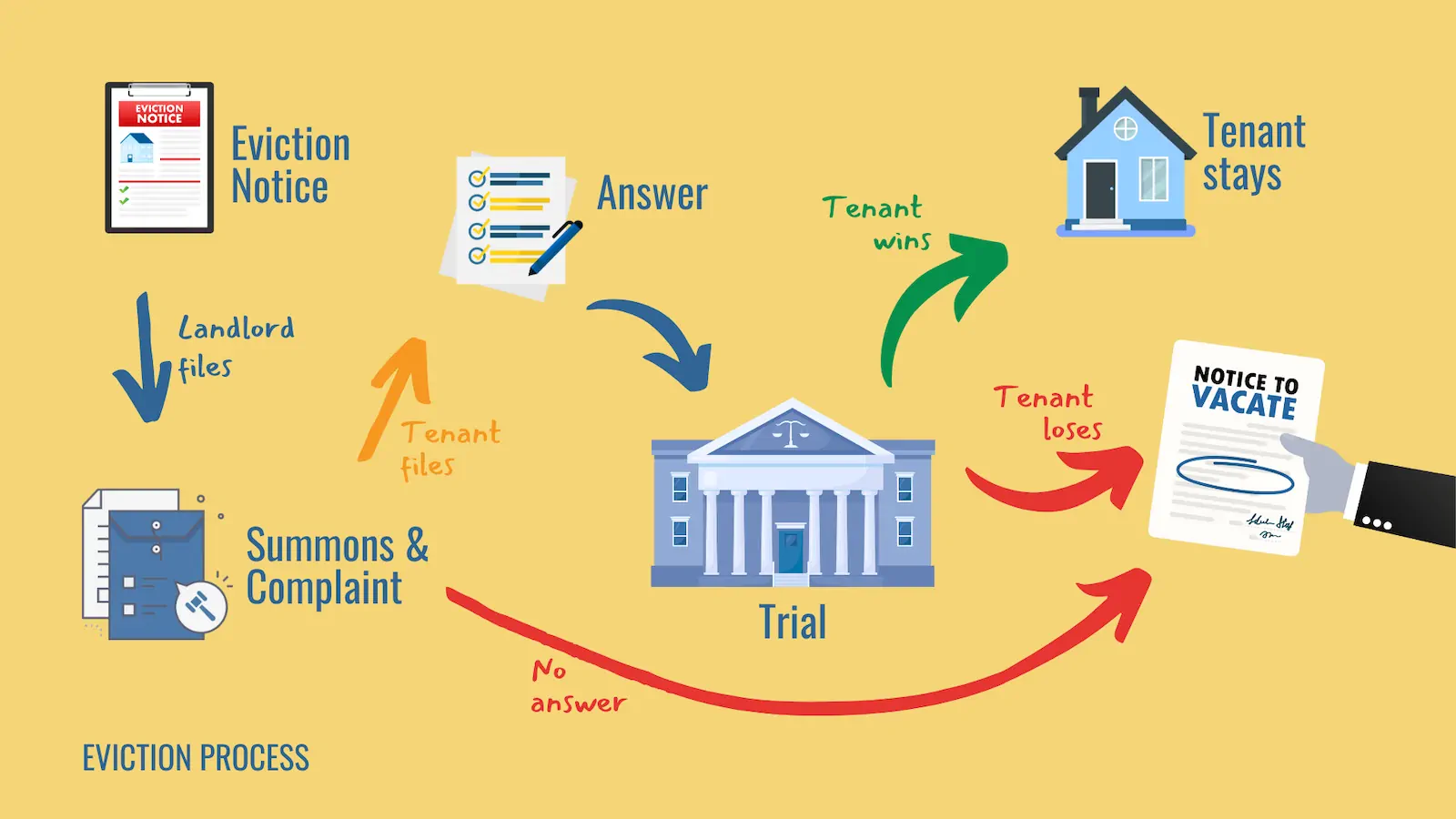
Step 1 - Eviction Notice
The first step in the eviction process requires a landlord to properly deliver a termination notice to the tenant.
Step 2 - Summons & Complaint
The next step in the eviction process is when the landlord files a summons and complaint with the clerk of the county courthouse. The court will send the tenant a notice of the lawsuit by mail and the landlord will have a copy of the summons and complaint personally delivered to the tenant. If the tenant receives notice of the lawsuit and the summons and complaint and does nothing, the landlord will likely win the lawsuit without a trial and be able to ask the sheriff to lawfully remove the tenant.
Step 3 - Answer
Step 3 occurs when a tenant responds to a summons and complaint by filing paperwork in the courthouse known as an Answer. Answers must be filed within 10 court business days to protect the tenant’s day in court. An Answer will contain defenses that the tenant wishes to assert in court. Once that answer is filed, the tenant has now preserved their right to speak about their defenses with a judge in court.
Step 4 - Trial
After the Answer is filed and the landlord receives a copy, the landlord may proceed to Step 4, requesting a trial. If a trial is requested, the tenant must attend that trial or risk the landlord winning automatically and the tenant having an eviction on their record as well as a possible money judgment against them. At trial, the tenant and landlord discuss their reasons for why they each should be allowed to possess the property. If the judge rules for the tenant, the tenant will stay. If the judge rules for the landlord, the tenant will need to vacate in the time agreed upon in court. If the tenant does not vacate within that time, the landlord will be able to ask the sheriff to lawfully remove the tenant.
For more information, watch this video or contact a housing expert or attorney.
Disclaimer: This video references a response time of 5 court business days for a Summons and Complaint for Unlawful Detainer. As of January 1, 2025, tenants now have 10 court business days to respond. This video is being updated to reflect the new law. For accurate and up-to-date information, please refer to California Code of Civil Procedure Section 1167.
Self-Help Clinics
Any tenant receiving a summons and complaint should visit one of the Unlawful Detainer Self-help clinics.
California Courts Self-help Guide
For more information on the California eviction process for tenants, click here.